Request thermostat repair & replacement for a property in Sarnia. Include the equipment, the problem or planned work, and your location so the request can be reviewed.
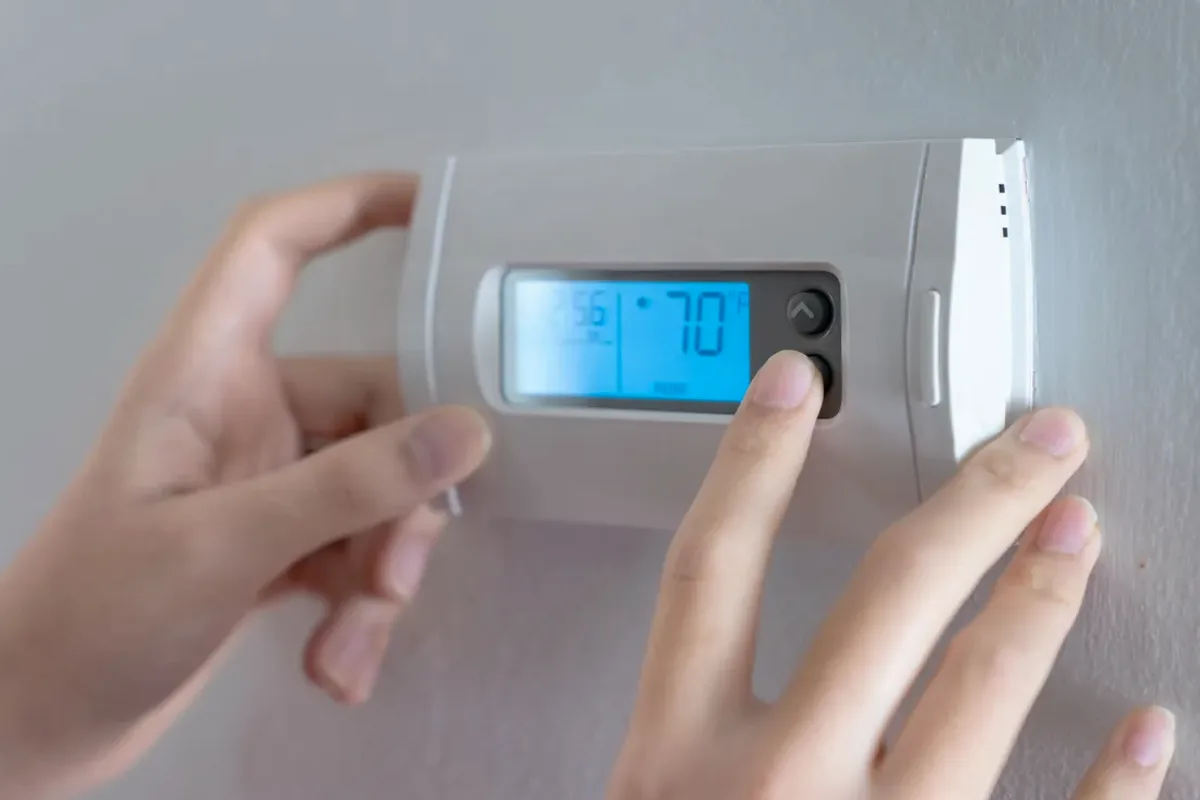
What does the thermostat display, and which equipment functions or stages does it control?
A thermostat that shows the wrong temperature, will not turn on, or cycles equipment unexpectedly may have a sensing, wiring, power, setting, or compatibility issue. The connected HVAC system matters because a thermostat must support its control stages and operating modes. Diagnosis should first establish whether the thermostat is reporting conditions incorrectly or whether the equipment is not responding to a valid call. Replacement, including a smart model, requires checking wiring and system compatibility before installation.
Record the displayed temperature, settings, timing of unexpected cycles, and whether the connected equipment responds in heating and cooling modes. The thermostat model, wiring information, and HVAC equipment model help establish compatibility and whether all stages are supported. If readings seem inaccurate, compare them with a separate room thermometer and note the difference. Do not remove the thermostat or handle its wiring; internal electrical work requires service personnel.
Temperature readings, cycling, and thermostat response
Wiring, equipment stages, and smart-control compatibility
Calibration or connection repair versus thermostat replacement
Assessment and Scope
Questions for the Proposed Work
01
Find whether the fault is control or equipment-side
A thermostat display or sensor problem differs from a furnace, air conditioner, or heat pump that receives a call but does not operate. The displayed reading, settings, equipment response, and timing of cycling can help separate these possibilities. Wiring and power condition may also affect operation. Diagnosis should establish the source before replacing a thermostat, since a new control will not correct a fault elsewhere in the HVAC system.
02
Check compatibility before upgrading
A programmable or smart thermostat should support the connected equipment's voltage, operating modes, and number of control stages. Heat pumps and staged furnaces can require different terminals or configuration than a basic heating system. Remote features also depend on the chosen model and its setup requirements. Confirm wiring compatibility and the equipment instructions before selecting a replacement, rather than assuming every smart thermostat works with every system.
03
Repair when calibration or a component is at fault
A repair may be appropriate when inspection identifies a correctable sensor, connection, setting, or calibration issue and the thermostat remains compatible with the equipment. Replacement is a separate choice if the unit continues to read inaccurately, cannot control required stages, or is not compatible with the HVAC system. Compare the diagnosed fault and replacement requirements; the thermostat's age alone does not identify the cause.
Compare the next step
Agree on device ownership, remote-account access, and who may change schedules before installing the control. Ask how existing occupant needs and equipment settings will be preserved. At handover, provide the authorized person with operating instructions and establish how future account or access changes will be managed. Record any owner-approved limits on account permissions and who receives equipment alerts. Confirm that ordinary local operation remains available to the occupant under the agreed arrangement.
Thermostat wiring is not universal. Do not connect wires by colour alone or work on energized wiring; a compatible control must be configured for the equipment it serves.