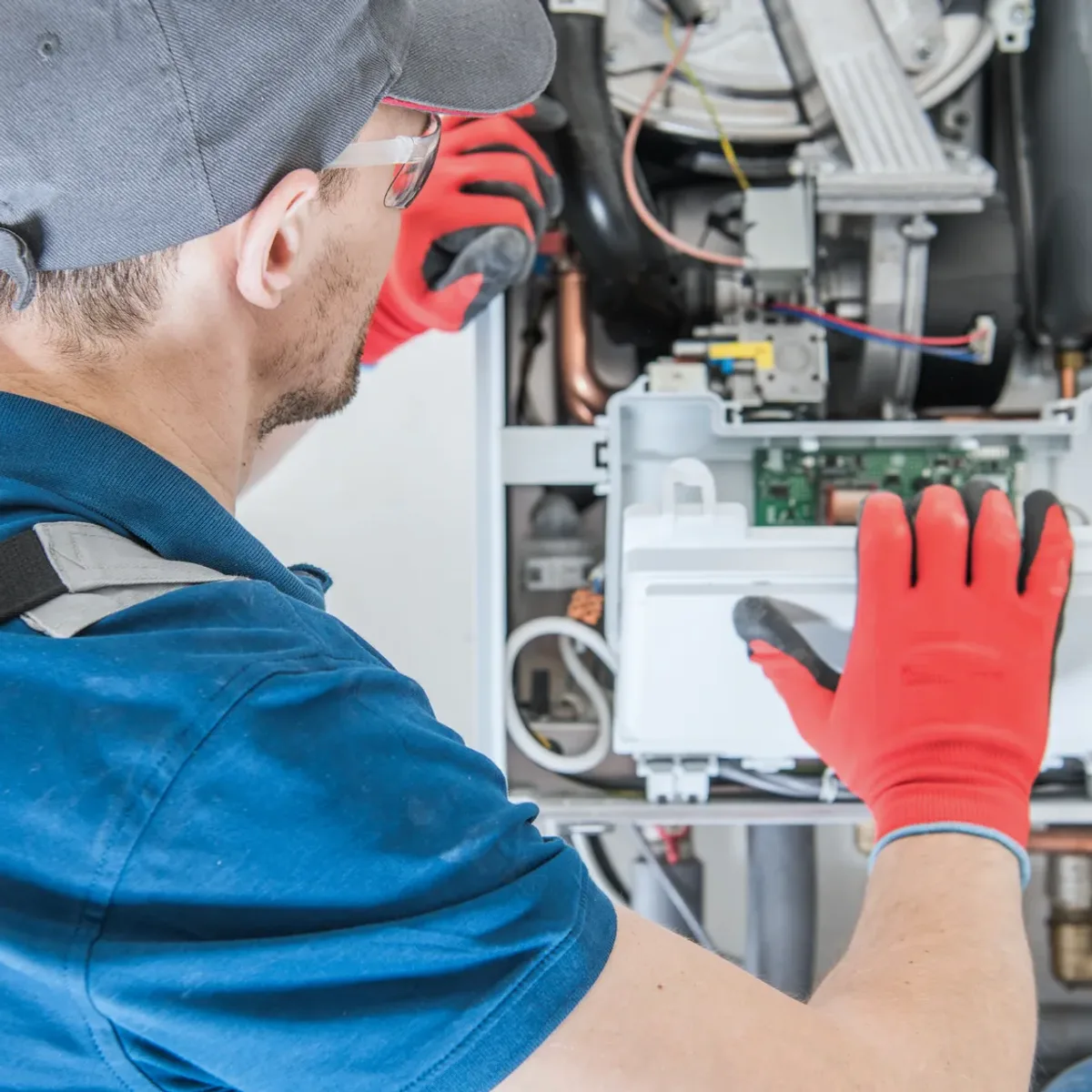
What boiler type and fuel serve the property, and does it heat radiators or in-floor loops?
Boiler work depends on both the heat source and the hydronic distribution system. A natural-draft cast-iron boiler serving radiators differs from a condensing boiler connected to in-floor loops in its venting, controls, and operating requirements. Repair diagnosis should distinguish burner or igniter faults from circulator, pressure, or expansion-tank concerns. Installation and maintenance are separate decisions, guided by equipment condition, fuel, venting, system compatibility, and the manufacturer's instructions.
Record the boiler model, fuel, vent arrangement, distribution type, pressure readings shown by the equipment, and which areas heat poorly. Note leaks, unusual cycling, fault codes, and recent service history. Those observations help distinguish ignition or burner issues from circulator, expansion, or hydronic-pressure faults. Do not adjust fuel, pressure controls, or safety devices; those checks require service personnel and equipment-specific procedures.
Gas, propane, and oil boiler repair and maintenance
Natural-draft cast-iron versus condensing boiler installation
Radiator and in-floor distribution, ignition, circulation, and pressure faults
Assessment and Scope
Questions for the Proposed Work
01
Distinguish burner faults from water-side faults
A boiler that will not fire may have an ignition, burner, fuel-supply, or control problem, while cold radiators or in-floor zones can point toward circulation or distribution concerns. Repeated pressure loss or a dripping relief valve calls for investigation of the pressure and expansion system, not an assumption that the boiler itself must be replaced. Fault history and measured conditions help locate the source; do not alter safety controls or fuel settings.
02
Match replacement to boiler and distribution
Replacing a natural-draft cast-iron boiler with a condensing model involves more than matching its output. Fuel availability, venting arrangement, condensate handling, controls, and the temperature needs of radiators or in-floor loops affect compatibility. A replacement assessment should compare the existing system with the proposed boiler and identify any required changes. If the current boiler remains serviceable and parts are available, targeted repair may be a distinct alternative to replacement.
03
Base maintenance on inspection and instructions
Maintenance findings can include combustion and venting condition, burner operation, circulator function, visible corrosion, pressure behaviour, and control response. Appropriate tasks and intervals depend on the boiler's manufacturer instructions, fuel, and inspection results. A hydronic flush is not an automatic requirement; it should be considered only when system condition and service guidance support it. Record any unresolved leak, recurring pressure loss, or uneven heating for diagnosis rather than treating maintenance as a repair.
Compare the next step
Identify who can report zone behaviour, provide access, and approve changes to the boiler or hydronic distribution. Ask how fault findings and proposed additional work will be communicated to the property decision-maker. Keep occupant comfort requests separate from authorization to alter piping, controls, or domestic hot-water equipment.
Leave fuel, combustion, electrical, and pressure-system work to a qualified contractor. Do not adjust safety devices or repeatedly add water to a system with an unexplained leak or pressure loss.